Termite Infestation Signs in Brooklyn, Queens, and NYC: What to Know
Termites are quietly destroying homes across Brooklyn, Queens, and Nassau County. Here's how to spot them before the damage becomes costly.
# Termite Infestation Signs in Brooklyn, Queens, and NYC: What to Know
Termites cause over $5 billion in property damage across the United States each year — and homeowners across Brooklyn, Queens, and Nassau County are far from immune. While many people think of termites as a suburban problem, the reality is that subterranean termites are extremely active in older wooden structures throughout New York City's boroughs and Long Island.
If you've been searching for pest control near me in Brooklyn, Queens, or Nassau County, termite protection should be part of your plan — especially if you own a brownstone, attached home, or pre-war building.
Why NYC and Long Island Have Termite Risk
Brooklyn and Queens have extensive stocks of wooden-framed row houses, brownstones, and attached homes built between 1880 and 1950. Many of these homes sit on foundations where soil moisture has been elevated for decades by aging drainage infrastructure, basement flooding, and proximity to underground utilities. Subterranean termites require moisture to survive — the soil conditions beneath many Brooklyn and Queens neighborhoods provide it year-round.
Nassau County — particularly communities like Hempstead, Garden City, Great Neck, and Manhasset — has a combination of older housing stock and suburban moisture conditions that mirrors what we see in the southern boroughs. Sandy soils near Long Island's north and south shores stay consistently moist, and wooded lots provide both harborage and a moisture-rich environment.
Warning Signs to Watch For
Mud Tubes: Pencil-width tunnels of dried soil on foundation walls or exposed basement walls. Subterranean termites build these tubes to travel between their underground colony and above-ground wood. In Brooklyn brownstones, check the basement foundation walls and under the front stoop. In Queens attached homes, check exposed sill plates in the basement.
Swarmer Termites: Late March through May, established termite colonies send out winged reproductive termites in large numbers. If you see dozens of small pale-winged insects emerging near windows, foundation gaps, or wooden moldings, call an exterminator immediately. Discarded wings near windowsills are equally diagnostic.
Hollow-Sounding Wood: Tap wooden floors, door frames, and baseboards. Hollow sounds indicate termites have consumed the interior. This is common in older wooden floor structures in Brooklyn row houses.
Tight-Fitting Doors: When termites consume wood and introduce moisture, frames warp. Multiple doors or windows in the same area that suddenly fit poorly warrant a professional inspection.
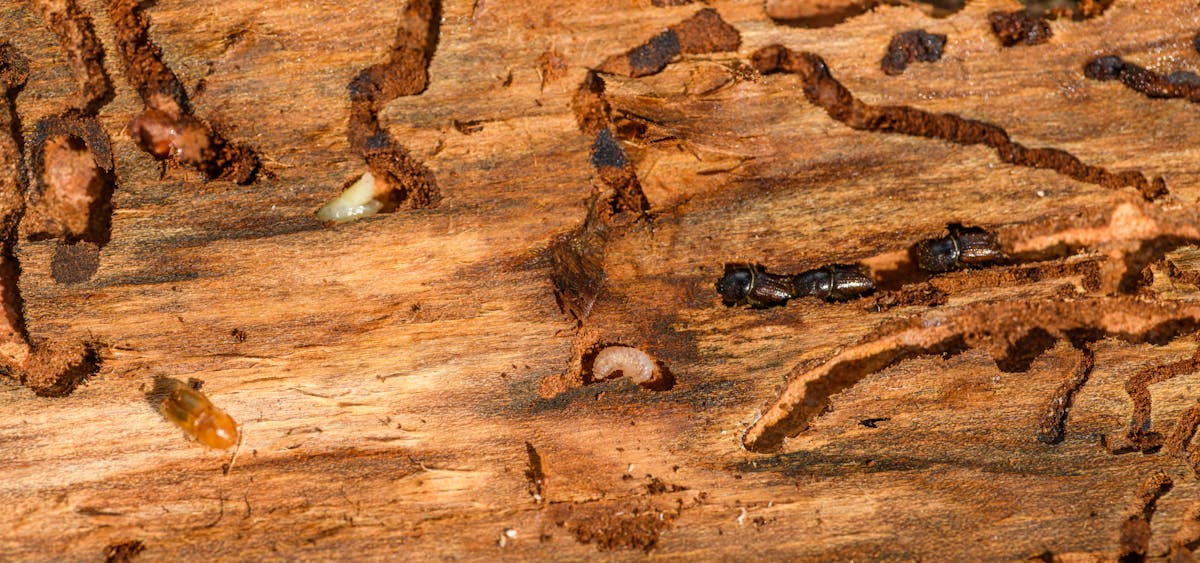
Frass: Small piles of pale sawdust-like material near wooden structures may indicate drywood termite activity (less common than subterranean but present in NYC).
Professional Termite Treatment
Jet Pest Control treats termite infestations throughout Brooklyn, Queens, Manhattan, Nassau, and Suffolk Counties. We use liquid soil barrier treatments and bait station systems depending on property characteristics. For attached homes and row houses, we coordinate treatment to protect against colony migration from adjacent properties.
Call (718) 710-0330 (Brooklyn, Queens, Manhattan) or (516) 774-5051 (Nassau, Suffolk) for a free termite inspection. When you need pest control near me for termite protection in NYC or Long Island, Jet Pest Control delivers fast, discreet service with unmarked vehicles.