Tick Control and Lyme Disease on Long Island: Nassau and Suffolk County Guide
Long Island is one of the highest Lyme disease transmission areas in the country. Here's how Nassau and Suffolk County homeowners can protect their families.
# Tick Control and Lyme Disease on Long Island: Nassau and Suffolk County Guide
Long Island consistently ranks among the highest Lyme disease transmission areas in the United States. Nassau and Suffolk Counties record hundreds of confirmed Lyme disease cases annually — and the actual number of infections is believed to be significantly higher due to underreporting and misdiagnosis. For homeowners with backyards adjacent to wooded lots, naturalized vegetation, or deer corridors, tick exposure is a genuine family health risk, not a remote possibility.
Jet Pest Control provides professional yard tick treatment across Nassau and Suffolk Counties. When you search for pest control near me for ticks on Long Island, here's what you need to know.
Why Long Island Has Such High Tick Density
Dense deer population: Long Island's white-tailed deer population has grown dramatically since the mid-20th century with the decline of natural predators and the expansion of suburban deer-friendly landscape. Deer are the primary reproductive host for adult deer ticks (Ixodes scapularis) — the species that transmits Lyme disease, anaplasmosis, and babesiosis.
Suburban-wooded interface: The transition zones between suburban lawns and wooded lots, naturalized areas, and unmaintained hedgerows — which exist throughout Nassau and Suffolk communities — are where deer ticks concentrate. This is exactly where children play and dogs run.
Long Island Sound marsh habitats: The wetland margins along the North Shore from Great Neck to Lloyd Neck and throughout the North Fork harbor tick populations associated with migratory birds and small mammals.
The Lyme Disease Transmission Cycle
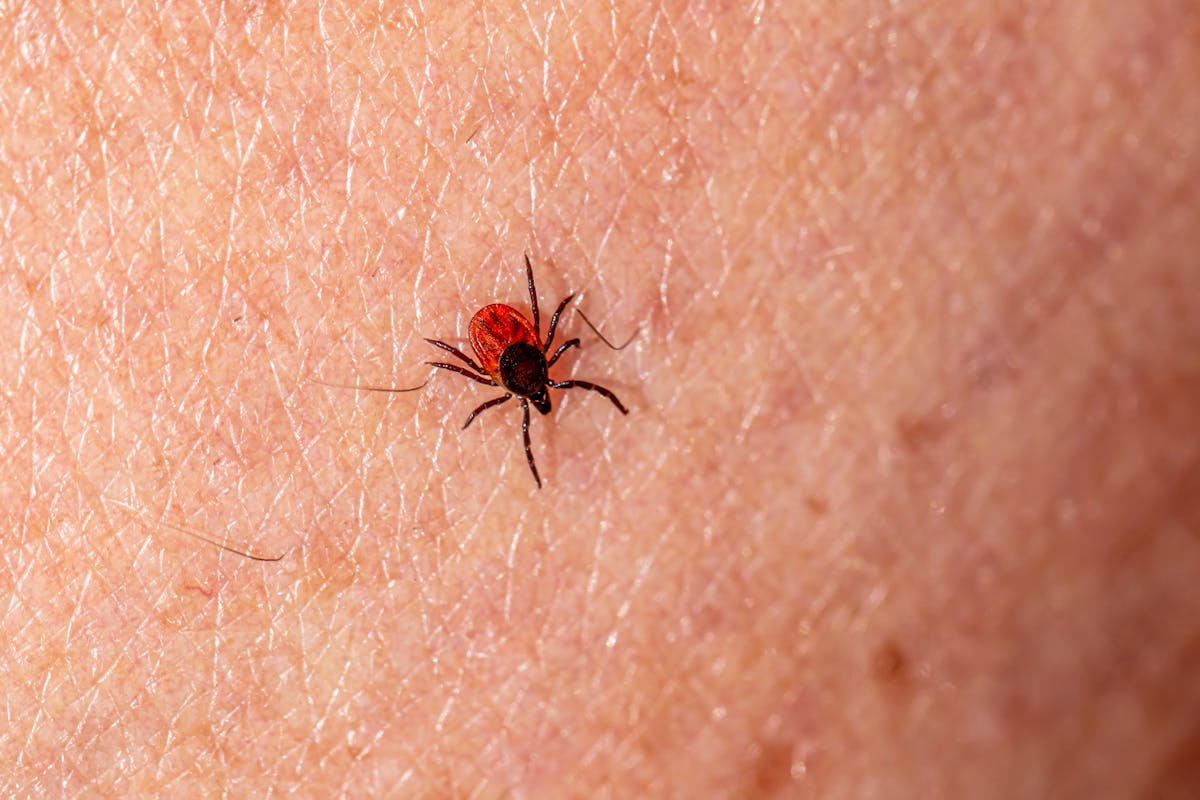
Nymph season (May–July): Deer tick nymphs — roughly the size of a poppy seed — are responsible for the majority of Lyme disease transmissions. Their tiny size means they're often not noticed during the 36–48 hours of attachment required for Borrelia burgdorferi transmission. This is the highest-risk period for Long Island residents.
Adult season (October–November, and March–April): Adult deer ticks are more visible (sesame seed size) but still dangerous. Adults seek larger hosts — deer, dogs, and people — in fall and again briefly in early spring.
Other Tick-Borne Illnesses on Long Island
Long Island is not just a Lyme disease concern:
• Anaplasmosis: Transmitted by deer tick; flu-like illness with fever and severe headache
• Babesiosis: Transmitted by deer tick; malaria-like illness serious in elderly and immunocompromised patients
• Rocky Mountain Spotted Fever: Transmitted by American dog tick (brown tick, common in suburban Long Island)
• Powassan Virus: Rare but serious; transmitted in as little as 15 minutes of tick attachment; documented on Long Island
High-Risk Nassau County Areas
Woodland parks and preserves throughout Nassau — Bethpage State Park, Cold Spring Harbor State Park, Caumsett State Historic Preserve — create tick pressure in adjacent communities. North Shore communities including Oyster Bay, Glen Cove, Locust Valley, Cold Spring Harbor, and Lattingtown see among the highest tick exposure rates in Nassau County.
High-Risk Suffolk County Areas
The Hamptons, North Fork wine country, Shelter Island, Fire Island, and communities throughout Smithtown, Huntington, Kings Park, and Nissequogue see very high deer tick densities. Eastern Suffolk — from Riverhead through the Forks — has some of the highest deer tick nymph density in New York State.
Yard Treatment Program
Professional tick yard treatment targets the transition zone between maintained lawn and wooded, mulched, or naturalized areas — where 80% of tick encounters occur. Jet Pest Control applies residual product to this zone, targeting nymphs and adults resting in low vegetation.
Timing: We recommend a May treatment (targeting peak nymph season) and a September treatment (targeting fall adults) for maximum season-long protection across Nassau and Suffolk County properties.
Personal protection and tick removal: Permethrin-treated clothing, DEET or picaridin repellent on exposed skin, and full-body tick checks after outdoor activity remain important personal protections alongside professional yard treatment.
Call (516) 774-5051 for Long Island tick treatment. When you need pest control near me for ticks in Nassau or Suffolk County, Jet Pest Control provides professional yard treatment that protects your family throughout the season.